
-
Reading view
- Text size:
Bible text
Atlas


-
- Core Bible
-
Core Bible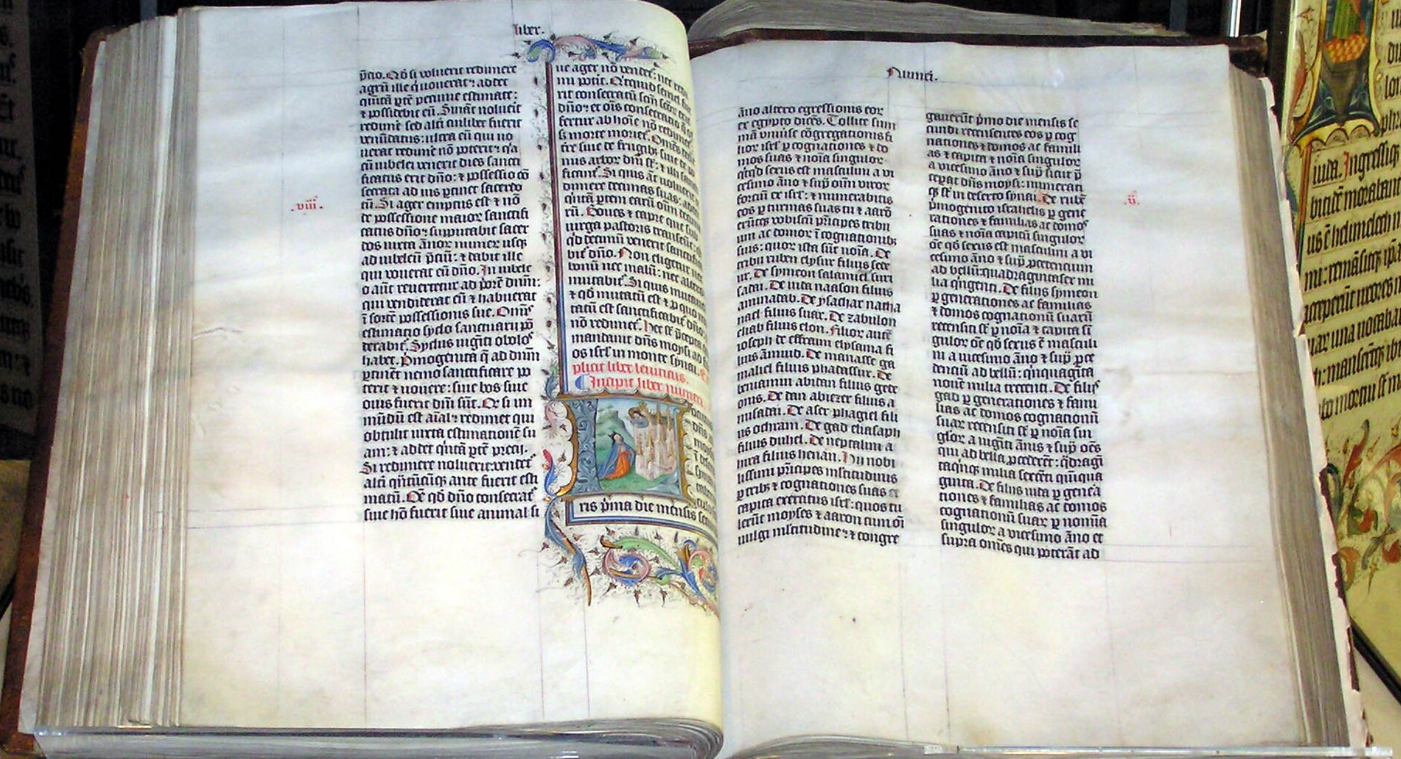
However, the biblical scrolls have always been divided into lines, with the last line ending with a blank space and the next line (which corresponds to a new verse) beginning on the next line.
There are also spaces between certain lines that mark different sections. The Hebrew manuscripts also have markings for sections, known as parashot. These are found, for example, in the Isaiah Scroll discovered at Qumran and dated to around 200 BCE.
While chapters are helpful to be able to easily look up passages, the divison has sometimes resulted in unfortunate breaks in the middle of passages that actually belong together. One example is John 8:1, which belongs with chapter 7. Another is the second chapter of Genesis, which should have started a few verses further along in Genesis 2:4.
The chapter divisions we use today were established in the early 13th century by Stephen Langton (1150–1228 AD). He divided the Latin Bible (the Vulgate) into sections that became our chapters. When John Wycliffe translated the Bible from Latin into English in the late 14th century, he used Langton’s chapter division. Since then, his division has become the standard for all modern Bibles.

Sculpture of Stephen Langton outside Canterbury Cathedral.
The Hebrew Bible was divided into verses by a Jewish rabbi named Nathan in 1448 CE.
Robert Estienne, also known as Stephanus, was the first to divide the New Testament into standard numbered verses in 1555 AD. Stephanus primarily used Nathan’s verse division for the Old Testament. Since then, beginning with the Geneva Bible, the chapter and verse division used by Stephanus has been accepted in nearly all Bible versions.
In the online version of the Core Bible, you can choose to remove the display of chapter and verse. In digital versions, there are other ways to look up passages than in a paper edition.
One great way to get a fresh look at a Bible book is to remove the chapter and verse and let the text speak for itself!
Stephen Langton (1150–1228 AD) was an English cardinal of the Roman Catholic Church and Archbishop of Canterbury during the Middle Ages, serving from 1207 AD until his death in 1228 AD.

It’s a bit of a strange story about how his tomb ended up in the middle of a wall, so his feet are outside the church and his head is inside the church!
How did this happened? As was customary, influential figures were buried in the church in various burial chambers. Stephen was buried on the right side of Canterbury Cathedral in southern England upon his death in 1228 AD.
A few hundred years later, the church was short on funds, and a wealthy noblewoman named Margaret Holland, Duchess of Clarence (1385–1439 AD), funded repairs and expansions. When Liselotte and I visited the cathedral in 2019, a guide told us that there were likely some bribes involved and that not everything went entirely by the book.

Margaret Holland, Duchess of Clarence
The duchess’s financial influence made it possibe for her to decide the best location for her own burial chamber. The problem was that Stephen Langton’s tomb already was there, but that didn't stop her from expanding the church to make room for herself and her first and second husbands, one on either side of her.

The wall for her extention grave chamber was built right over Stephen Langton's grave! This menat that part of his coffin now is inside the church and the other part is outside!

Here is Stephen Langton’s half-tomb inside the church, containing his torso and head.
The photo below was taken outside the church. Here you can see the other part of the coffin, with his feet, which extend beyond the wall.

Some say that the man who divided the Bible was himself divided.
When I tell this story I often say that he is an example to us, we should have our head in the church and be heavenly minded, but our feet should be outside the church – sharing the Gospel and making deciples letting them get start a "new chapter" in their lives!

