-
Reading view
- Text size:
Bible text
Atlas


-
- Core Bible
-

Choose book Choose another book
TR has 25 Words, NA has 26 (+1).
Below is an interlinear translation which follows the original scripture word for word. We are still working on the lexicon. Please contact us if you want to help.
Below is an interlinear version in table form that follows the word order of the original text. Clicking on the Strongs number will show the words in their basic form (note that sometimes the grammar causes not only the endings to change, but also the initial letters of the word).
| Strongs nr | Greek | English | Grammar | Code |
|---|---|---|---|---|
| G2532 |
Καὶ (Kai) |
And | Conj. Conjunktion |
CONJ |
| G2064 |
ἔρχονται (erchontai) |
they come | VERB Verb pres. middle dep. ind. present middle or passive deponent indicative pl. third person plural |
V-PNI-3P |
| G1519 |
εἰς (eis) |
to | Preposition Preposition |
PREP |
| G2410 |
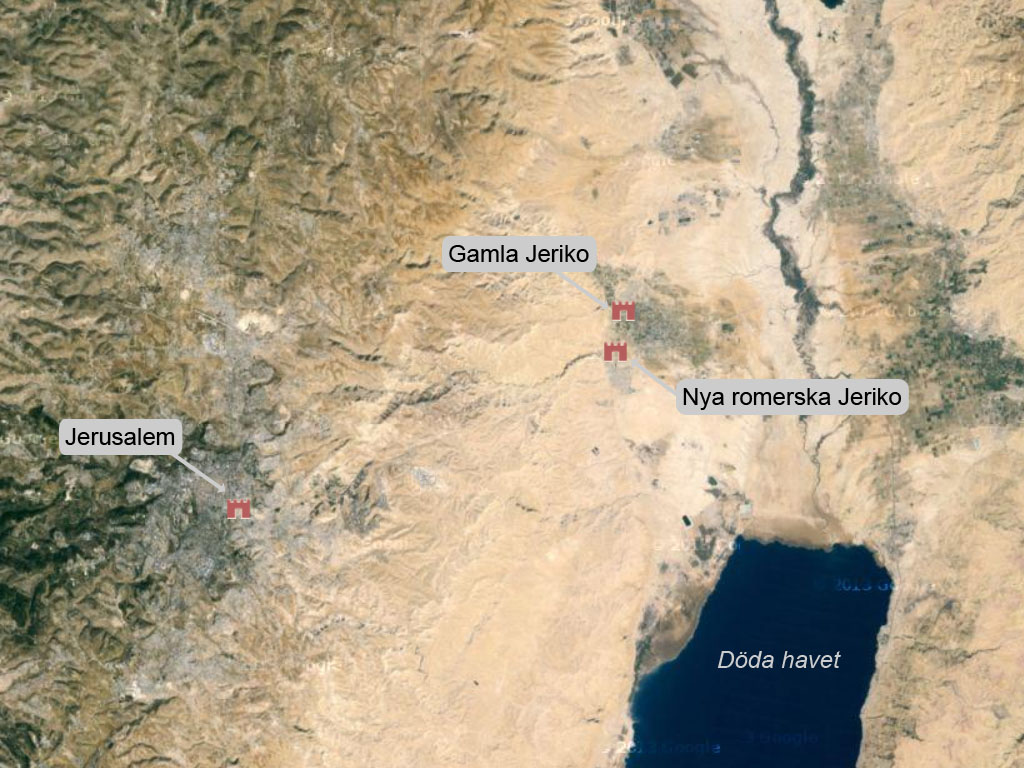
Ἰεριχώ. (Iericho.) |
Jericho. | Noun Noun acc. sing. ♀ accusative singular feminine Location (location) |
N-ASF-L |
| G2532 |
καὶ (kai) |
And | Conj. Conjunktion |
CONJ |
| G1607 |
ἐκπορευομένου (ekporeyomenoy) |
when was going out | VERB Verb pres. middle dep. part. present middle or passive deponent Participle genitive sing. ♂ genitive singular masculine |
V-PNP-GSM |
| G0846 |
αὐτοῦ (aytoy) |
He | Personal Pron. Personal Pronoun gen. sing. ♂ genitive singular masculine |
P-GSM |
| G0575 |
ἀπὸ (apo) |
from | Preposition Preposition |
PREP |
| G2410 |
Ἰεριχὼ (Iericho) |
Jericho — | Noun Noun gen. sing. ♀ genitive singular feminine Location (location) |
N-GSF-L |
| G2532 |
καὶ (kai) |
and | Conj. Conjunktion |
CONJ |
| G3588 |
τῶν (ton) |
the | Definite article Definite article gen. pl. ♂ genitive plural masculine |
T-GPM |
| G3101 |
μαθητῶν (matheton) |
disciples | Noun Noun gen. pl. ♂ genitive plural masculine |
N-GPM |
| G0846 |
αὐτοῦ (aytoy) |
of Him, | Personal Pron. Personal Pronoun gen. sing. ♂ genitive singular masculine |
P-GSM |
| G2532 |
καὶ (kai) |
and | Conj. Conjunktion |
CONJ |
| G3793 |
ὄχλου (ochloy) |
a crowd | Noun Noun gen. sing. ♂ genitive singular masculine |
N-GSM |
| G2425 |
ἱκανοῦ (ikanoy) |
large — | Adjective Adjective gen. sing. ♂ genitive singular masculine |
A-GSM |
| G3588 |
ὁ (o) |
the | Definite article Definite article nom. sing. ♂ Nominative singular masculine |
T-NSM |
| G5207 |
υἱὸς (yios) |
son | Noun Noun nom. sing. ♂ Nominative singular masculine |
N-NSM |
| G5090 |
Τιμαίου (Timaioy) |
of Timaeus, | Noun Noun gen. sing. ♂ genitive singular masculine Person (Person) |
N-GSM-P |
| G0924 |
Βαρτιμαῖος, (Bartimaios,) |
Bartimaeus, | Noun Noun nom. sing. ♂ Nominative singular masculine Person (Person) |
N-NSM-P |
| G5185 |
τυφλὸς (typhlos) |
blind | Adjective Adjective nom. sing. ♂ Nominative singular masculine |
A-NSM |
| G6075 |
προσαίτης, (prosaites,) |
beggar, | Noun Noun nom. sing. ♂ Nominative singular masculine |
N-NSM |
| G2521 |
ἐκάθητο (ekatheto) |
was sitting | VERB Verb imp. middle dep. ind. imperfect middle or passive deponent indicative sing. third person singular |
V-INI-3S |
| G3844 |
παρὰ (para) |
beside | Preposition Preposition |
PREP |
| G3588 |
τὴν (ten) |
the | Definite article Definite article acc. sing. ♀ accusative singular feminine |
T-ASF |
| G3598 |
ὁδόν. (odon.) |
road. | Noun Noun acc. sing. ♀ accusative singular feminine |
N-ASF |
The color of the words tell you how rare the word is, the more red, the fewer uses.
Colorscale:
1-5
|6-10
|11-50
|51-100
|101-500
|501-1000
|1000+